 Penny Payday
A $640 week of delivery payouts at 25% puts $160 aside and leaves $480 to plan the week with ($160 + $480 = $640).
Why people pick 25% to 30%
When you work for yourself, nobody withholds tax from your pay, so you cover two things yourself:
- Self-employment tax: 15.3%. That's 12.4% for Social Security and 2.9% for Medicare, the share an employer would normally split with you. It applies once your net earnings from self-employment are $400 or more in a year. (IRS)
- Income tax on top, at your federal bracket, plus state income tax in most states.
Both are figured on your earnings after business expenses. Miles driven for deliveries, a phone you use for work and similar costs can lower what the tax is figured on, which is why the right percent is personal. Some people need less than 25%, some more. A tax preparer can tell you yours.
When the IRS wants it
If you expect to owe $1,000 or more for the year, the IRS generally expects estimated payments during the year instead of one bill in April (IRS). The schedule:
| Money earned | Payment due |
|---|---|
| January 1 to March 31 | April 15 |
| April 1 to May 31 | June 15 |
| June 1 to August 31 | September 15 |
| September 1 to December 31 | January 15 of the next year |
When a date falls on a weekend or legal holiday, it moves to the next business day (IRS).
That's why setting aside from every payout matters: the money is there when a due date comes, instead of coming out of rent.
How Penny handles it
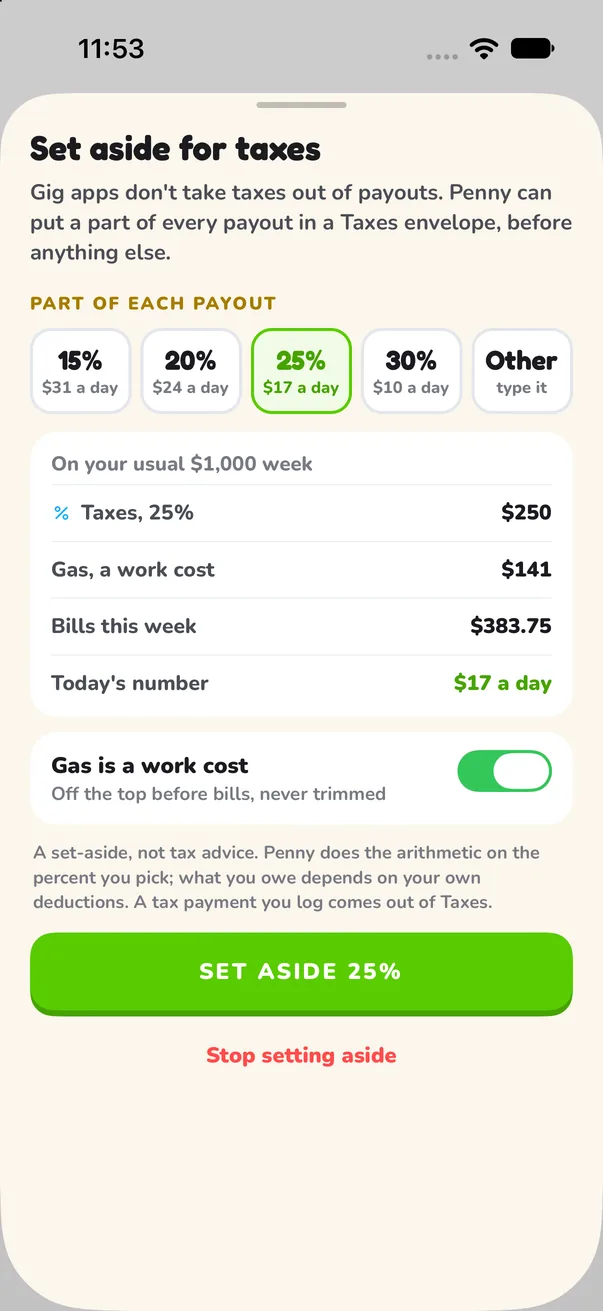
In the app, gig and 1099 pay gets a Taxes envelope. You pick the percent (15%, 20%, 25%, 30% or your own), and that part of every payout comes off the top before bills and envelopes are planned. Your daily number is figured on what's left, so it never quietly spends the tax money.
Penny also plans gig weeks on a number you choose, like your last 4 weeks or your lowest week, and counts payouts toward it as they land.

Payouts all week, one number a day. Penny takes the tax part off the top and plans the rest.

Penny Payday does arithmetic on the numbers you enter. It is not tax advice and doesn't file or pay taxes for you.